

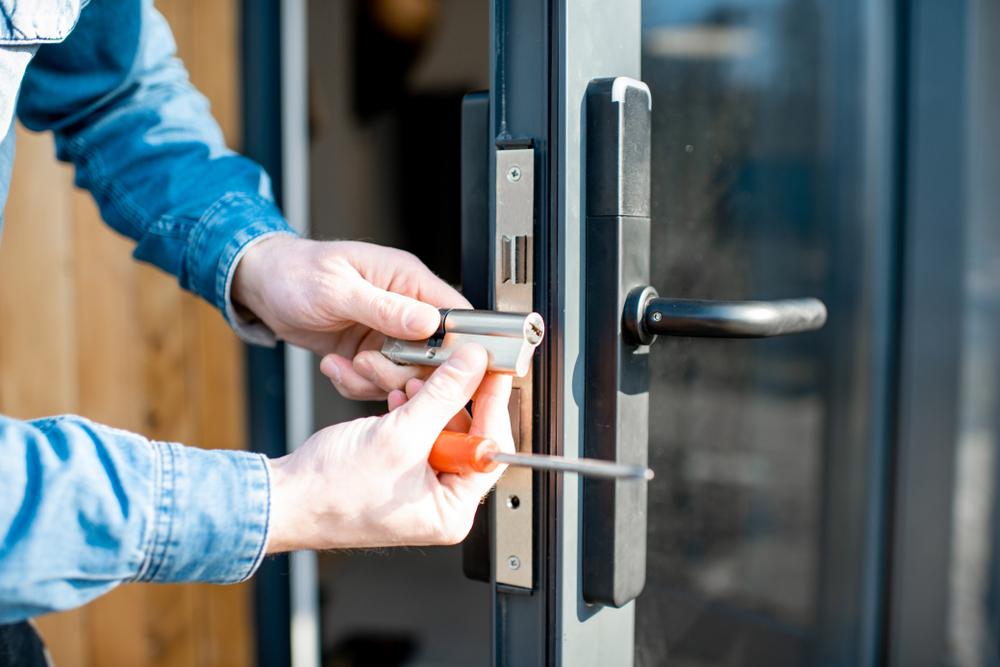
A commercial key can change hands many times over the life of a South Orange County business. Employees leave, vendors finish projects, property managers change, and spare keys are sometimes copied without a reliable record. Rekeying gives businesses a practical way to restore control over who can unlock the property without automatically replacing every lock.
Quick answer: Commercial lock rekeying changes the internal configuration of compatible lock cylinders so existing keys no longer operate them and new keys can be issued. Businesses should consider rekeying after employee turnover, lost or unreturned keys, a tenant change, a security concern, or any situation where management cannot confidently account for every key.
What local businesses should know
-
Rekeying can restore key control without requiring complete lock replacement when the existing hardware is compatible and in suitable condition.
-
Businesses in South Orange County may need to manage access across storefronts, professional offices, warehouses, medical offices, and multi-tenant commercial properties.
-
Companies operating in communities such as Irvine, Lake Forest, Mission Viejo, Laguna Hills, and San Juan Capistrano may have employees, contractors, cleaners, and vendors who require different levels of access.
-
A commercial rekey can often include multiple compatible locks so authorized staff can use a more manageable key arrangement.
-
Damaged, outdated, or unsuitable hardware may need repair or replacement rather than rekeying alone.
Why Does Commercial Lock Rekeying Matter in South Orange County?
Commercial lock rekeying matters in South Orange County because businesses often have multiple people who need temporary or ongoing access, making key control difficult over time. Offices, retail spaces, service businesses, and multi-tenant properties can accumulate unreturned keys and unknown copies, leaving management uncertain about who can enter.
The region includes dense commercial corridors and business centers stretching from Irvine and Lake Forest through Mission Viejo, Laguna Niguel, Dana Point, and San Clemente. A single location might regularly provide access to employees, cleaning crews, maintenance contractors, delivery personnel, or property representatives.
Kwikeys Lock & Security helps businesses evaluate commercial locks and determine when rekeying is an appropriate way to regain control of physical keys. From this point forward, we focus on matching the service to the condition of the hardware and the business’s actual access needs.
What Do We Commonly See With Commercial Key Control?
A common field observation is that businesses often consider rekeying only after they realize they cannot account for every key that has been issued. Rather than relying on unsupported local statistics, it is more useful to look at the practical situations that create uncertainty around commercial access.
Employee turnover is one example. Even when an employee returns a key, management may not know whether another copy exists. Similar uncertainty can follow a contractor project, management transition, tenant turnover, or lost key.
For businesses with several exterior and interior doors, the issue can become more complicated because different employees may carry different sets of keys. A locksmith can evaluate whether compatible cylinders can be rekeyed and whether the resulting key arrangement can simplify access.
How Can Poor Key Control Affect a Local Business?
Poor key control can affect a local business by creating uncertainty about unauthorized access, complicating employee access, and increasing the difficulty of responding to staffing or tenancy changes. The impact is particularly noticeable when a South Orange County location has multiple doors, shifts, departments, or authorized users.
A misplaced key is not merely a convenience problem when it operates an exterior door. An unreturned key from a former employee can create similar concerns. For property managers, uncertainty can multiply when suites turn over or contractors have been given keys during improvements.
Rekeying allows management to establish a new starting point. Old keys can be made unusable in the rekeyed cylinders, while new keys are distributed to currently authorized users.
What Are the Warning Signs That Your Business May Need Rekeying?
A business may need commercial lock rekeying when management no longer has reliable control over existing keys or when access authorization has changed. South Orange County business owners and property managers should pay particular attention after staffing, occupancy, or security changes.
Common warning signs include:
-
A key has been lost and its location is unknown.
-
A departing employee did not return a key.
-
Management does not know how many copies of a key exist.
-
A new commercial tenant has taken possession of a suite.
-
Contractors or temporary workers previously received keys.
-
The business recently experienced an access or security concern.
-
Too many employees are carrying unnecessary keys.
-
Management wants to reorganize access to compatible locks.
These signs do not automatically mean every lock needs replacement. They indicate that the existing access arrangement should be evaluated.
When Should a South Orange County Business Call a Locksmith?
A South Orange County business should call a locksmith when lost, unreturned, or uncontrolled keys could provide access to the property, or when management needs to reorganize physical key access. A professional can determine whether rekeying is suitable or whether damaged or incompatible hardware requires another solution.
Managers can safely perform basic administrative checks themselves. Review who has keys, identify which doors each key opens, collect keys from departing personnel, and document future key assignments.
The lock itself is where DIY should generally stop. Commercial doors can use different cylinders, locksets, exit hardware, and access arrangements. An evaluation helps avoid assuming that every lock can or should be handled the same way.
What Common Situations Lead to Commercial Rekeying?
Employee turnover, lost keys, tenant changes, contractor access, and unclear key inventories are among the most common situations that lead businesses to consider rekeying. These circumstances are especially relevant across South Orange County’s mix of office, retail, service, and multi-tenant commercial properties.
1. Employee turnover: If a former employee had a key, rekeying can remove the usefulness of that key without depending on whether every copy was returned.
2. Lost keys: A missing key creates uncertainty, particularly if it can be associated with a specific business or property.
3. Tenant turnover: Commercial property owners and managers may want a new key configuration when one tenant leaves and another occupies the suite.
4. Contractor access: Remodelers, maintenance providers, cleaners, and other vendors may receive temporary access during a project or service period.
5. Unclear key history: Businesses that have occupied a location for years may simply lose track of how many keys were created and who received them.
How Can Businesses Maintain Better Key Control?
Businesses can maintain better key control by documenting key assignments, limiting unnecessary copies, collecting keys promptly, and reviewing access whenever staffing or occupancy changes. A simple process can be especially useful for growing companies with several employees or doors.
Keep a current record of which employees receive keys and which doors those keys operate. Avoid distributing keys merely for convenience when an employee does not need ongoing access. When someone leaves the company, make key return part of the normal offboarding process.
Businesses should also review access after a remodel, tenant transition, management change, or extended contractor project. If the key inventory no longer matches reality, a professional rekey can establish a cleaner access baseline.
What Results Should You Expect From Commercial Rekeying?
Commercial rekeying should result in compatible locks operating with newly configured keys while the previous keys no longer operate those rekeyed cylinders. The exact result depends on the existing hardware, the number of doors involved, and the access arrangement the business needs.
Rekeying does not repair every physical problem with a door or lock. A worn lock, damaged cylinder, alignment problem, or unsuitable piece of hardware may require additional attention.
Before service, businesses can identify the doors involved and decide which employees should have access to each area. That makes it easier to discuss a practical key arrangement.
What Mistakes Should Businesses Avoid With Rekeying?
Businesses should avoid treating rekeying as an isolated lock task without first considering who actually needs access and whether the existing hardware is appropriate. A better approach combines the mechanical work with a clear key-control plan.
Mistake: Waiting until nobody knows how many keys exist.
Consequence: Management loses confidence in who may have access.
Better approach: Review key assignments whenever staffing or tenancy changes.
Mistake: Assuming every lock needs replacement.
Consequence: A business may overlook rekeying as a possible solution.
Better approach: Have compatible, serviceable hardware evaluated first.
Mistake: Giving every employee the same access.
Consequence: More keys may circulate than necessary.
Better approach: Match access to actual job responsibilities when the hardware and keying arrangement allow it.
Mistake: Ignoring worn hardware during a rekey.
Consequence: Key control may improve while an existing mechanical problem remains.
Better approach: Address lock condition and access control as related issues.
What Is a Common South Orange County Rekeying Scenario?
A common South Orange County scenario involves a business discovering after an employee or tenant transition that several keys have circulated but not all copies can be accounted for. This is an illustrative local scenario, not a specific Kwikeys Lock & Security case study.
Consider a multi-door office near a commercial corridor in Mission Viejo or Lake Forest. Employees have exterior keys, a cleaning provider has received a copy, and a contractor previously needed after-hours access. When staffing changes, management realizes the original key has been duplicated several times.
Instead of assuming every lock must be replaced, the business can have the existing hardware evaluated. Compatible locks may be rekeyed, new keys issued, and the key inventory documented going forward.
Which Locksmith Services Can Help Restore Business Access Control?
Commercial rekeying, lock repair, lock replacement, and access planning can address different parts of a business’s physical security needs. The right service depends on whether the main problem is uncontrolled keys, damaged hardware, changing access requirements, or a combination of issues.
Rekeying is primarily useful when the business wants existing compatible locks to work with new keys. Repair may be appropriate when hardware is malfunctioning. Replacement may make more sense when a lock is damaged, unsuitable, or no longer meets the property’s needs.
How Does Rekeying Compare With Replacing Commercial Locks?
Rekeying is generally focused on changing key access while retaining compatible lock hardware, whereas replacement changes some or all of the physical locking hardware. Neither option is automatically right for every Orange County commercial property.
Rekeying can make sense when the hardware is functioning properly but key control has been lost. Replacement becomes more relevant when hardware is worn, damaged, incompatible with the desired setup, or needs to be changed for another operational reason.
Businesses should also distinguish planned rekeying from emergency service. A known employee departure can often be handled as a planned access change, while an immediate security concern may require faster attention.
Where Can Businesses Request Commercial Rekeying Service?
Businesses throughout South Orange County can consider commercial rekeying when they need to restore control over physical keys after staffing, occupancy, or access changes. Relevant communities include Irvine, Lake Forest, Mission Viejo, Laguna Hills, Laguna Niguel, Dana Point, San Juan Capistrano, and San Clemente.
Specific service availability should be confirmed when scheduling.
What Can Happen If a Business Delays Rekeying?
Delaying a needed rekey can leave a business uncertain about who possesses a working key and prolong an access-control problem that management already knows exists. The concern is less about predicting a break-in and more about eliminating avoidable uncertainty.
If an old key remains valid, collecting one physical copy does not necessarily answer whether duplicates were made. For a local business with employees, inventory, equipment, records, or tenant spaces to manage, unresolved key access can also complicate internal security procedures.
Frequently Asked Questions About Commercial Lock Rekeying
When should a South Orange County business rekey its locks?
A South Orange County business should consider rekeying after lost keys, employee departures, tenant changes, contractor access, or any situation where existing keys cannot be fully accounted for. The goal is to make old keys unusable in compatible rekeyed cylinders and provide authorized users with newly configured keys.
Do I need to replace my commercial locks if an employee does not return a key?
Not necessarily, because compatible commercial locks may be rekeyed instead of completely replaced. If a former employee’s key still operates an exterior or restricted-area lock, a locksmith can evaluate the hardware and determine whether rekeying can remove that key’s access while retaining the existing lock.
Can several locks at an Orange County business be rekeyed?
Yes, multiple compatible locks can potentially be included in a commercial rekeying project. The appropriate setup depends on the lock hardware and which doors different users need to access. An evaluation can determine how the existing cylinders can be configured to support a more manageable key arrangement.
Should a new commercial tenant in South Orange County rekey the space?
A new commercial tenant should consider rekeying when the history and distribution of existing keys are uncertain. Previous tenants, employees, contractors, or other parties may have received keys in the past. Rekeying compatible locks provides a new access baseline for the current occupancy.
Should businesses rekey after contractors finish work?
Rekeying may be appropriate if contractors received keys and the business cannot confidently account for every copy afterward. For businesses in Irvine, Mission Viejo, or surrounding communities, the decision should depend on what areas the key accessed, whether keys were controlled, and the property’s current security requirements.
Is rekeying the same as changing a lock?
No, rekeying changes how a compatible lock cylinder responds to keys, while lock replacement changes the physical hardware. Rekeying is often considered when the existing hardware remains suitable but key access needs to change. Worn, damaged, or unsuitable locks may require repair or replacement instead.
Can rekeying simplify keys for a multi-door business?
Rekeying may simplify a business’s key arrangement when the existing hardware is compatible with the desired configuration. For offices, storefronts, and multi-room commercial properties in South Orange County, a locksmith can evaluate which doors need shared or separate access before determining an appropriate setup.
What should a Laguna Niguel or San Clemente business do after losing a key?
A business should first identify which doors the lost key operates and who may be affected, then consider professional rekeying if unauthorized access is a concern. If the key cannot be recovered or its location is unknown, rekeying compatible cylinders can prevent the missing key from continuing to operate them.
Restore Control Over Access to Your South Orange County Business
Commercial rekeying gives local businesses a practical option when the locks are serviceable but control over existing keys has become uncertain. We can help evaluate the hardware, access situation, and appropriate locksmith solution without assuming every commercial lock needs the same service.
Take control of who has keys to your business.
We can help you determine whether rekeying, repair, or replacement fits your property’s current access needs.